Define the transaction facts
A diligence question depends on the proposed structure, entities, and steps. Give the reviewer the current transaction description before asking which contracts need action.
Record assumptions that may change. A preliminary structure should not become an unstated basis for a final consent conclusion.
Extract distinct triggers
Capture assignment, merger, ownership change, control, delegation, and other relevant wording separately. Record consent, notice, termination, and other consequences.
Include exceptions and definitions. A short clause summary can miss language that materially changes the action required.
Test an affiliate exception
Suppose a clause permits certain affiliate assignments but the proposed transaction changes control of the contracting entity. The exception may not answer the question being asked.
Give counsel the exact wording and transaction facts. Do not infer the legal result from a familiar clause heading.
Reconcile amendments and exhibits
Check side letters, amendments, and incorporated schedules. Public SEC filings can provide useful examples or source documents where relevant, but confirm completeness and status for the actual contract.
A filed exhibit should not automatically replace the client's executed agreement family.
Prepare the action register
Record the reviewed conclusion, required consent or notice, owner, evidence, and target timing. Keep unresolved interpretation questions open.
After structure changes, identify which rows require reassessment. Preserve counsel's approval and completion evidence for the closing record.
Worked example and decision record
Illustrative U.S. transaction: a buyer proposes a share acquisition. One contract restricts assignment, another has an express ownership-change trigger, and a third contains an affiliate exception. A matrix that asks only “Is consent required?” can collapse three different interpretive questions into misleading yes/no answers.
| Contract wording found | Transaction fact to check | Record for counsel |
|---|---|---|
| Assignment restriction | Which entity remains party and which steps transfer rights? | Do not assume the clause answers a share-sale question |
| Express control trigger | Does the proposed ownership change fall within the definition? | Preserve the definition, exceptions and consequence |
| Affiliate exception | Does the relevant step satisfy the actual exception? | Check conditions rather than matching the word affiliate |
| Notice provision | What event, recipient and timing does it describe? | Keep notice action distinct from consent |
These examples illustrate extraction and issue spotting, not the legal effect of any real contract. Give counsel the transaction steps and complete agreement family. If the structure changes, reopen the affected rows rather than carrying an earlier consent conclusion into the revised deal.
Run a reviewable workflow
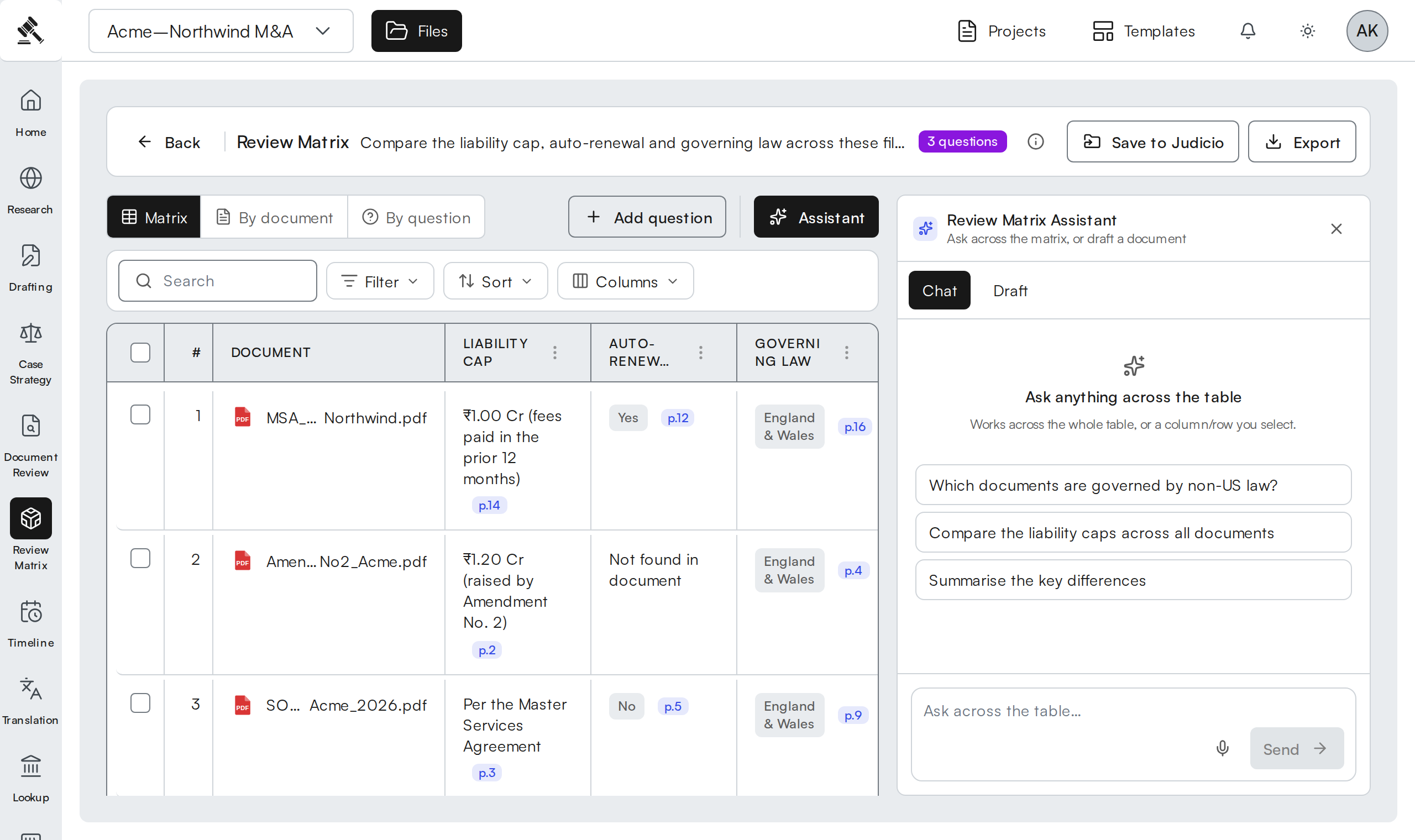
Select the executed agreements, amendments and incorporated schedules in Review Matrix. Use separate questions for the trigger, defined terms, exception, consequence and notice wording. Open each cited passage and resolve missing schedules before treating the record as complete.
Public exhibits located through SEC EDGAR can help identify relevant filed documents or examples. Establish whether an exhibit is complete and current for the agreement under review; it should not silently replace the client’s executed copy.
Export the reviewed extraction with citations, then maintain an action register with counsel’s conclusion, responsible owner, consent or notice requirement, timing and completion evidence. Keep “interpretation open,” “action required,” “requested” and “completed” separate. A sent request does not establish that consent has been received. Preserve the final evidence supporting each completed action in the closing file.
Checklist and acceptance criteria
Use this checklist at handover. Record the reviewer, date, source version and unresolved items beside each answer; a tick without evidence does not close the issue.
- Record the proposed transaction structure and assumptions.
- Extract assignment, control, merger and related wording separately.
- Reconcile definitions, exceptions, amendments and incorporated terms.
- Have counsel approve the action required and timing.
- Track completion evidence and reopen rows after structure changes.
Download the editable build a change-of-control consent matrix for us m&a checklist (Markdown). It includes blank fields for your matter record and can be opened in a text editor or copied into your team’s document system.
The register is ready when each material contract has a reviewed conclusion or a clearly owned open question, and required actions have evidence-backed statuses. It supports the closing decision; it does not make that decision automatically.
Sources and next steps
This is an editorial workflow guide for legal professionals. The suggested checks are our practical recommendations, not a statement that a regulator requires a particular software workflow.
Explore Review Matrix and Document Review, or review Judicio's regional coverage and limitations. Check the underlying source and your organisation's approved process before relying on an output.